
The Day AI Walked into My School
Issue #10
The Day AI Walked into My School
It started with a sophomore English paper.
One of my best teachers — seventeen years in the classroom, the kind of educator who could tell in two paragraphs whether a piece of writing was authentically a student’s — came to me in October with a printed essay in her hand and a look I hadn’t seen on her face before. Not anger. Not confusion. Something closer to grief.
“I can’t prove it,” she said. “But I know this isn’t his writing. The vocabulary is his vocabulary. The argument structure isn’t. And I don’t know what to do about it because there’s no policy.”
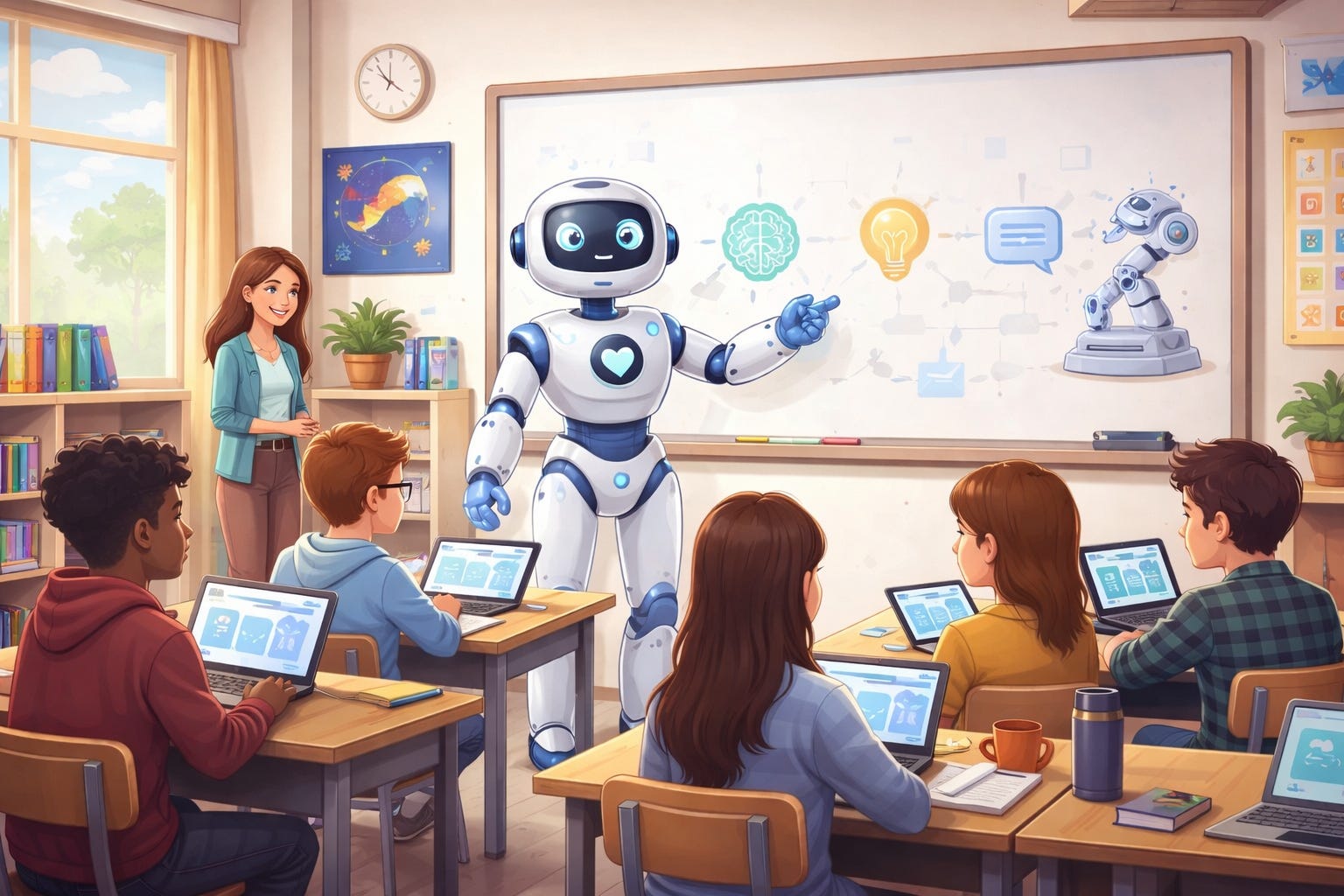
She was right on both counts. It probably wasn’t entirely his writing. And there was no policy.
I sat with that essay for a long time after she left. Because I understood that we weren’t talking about one student and one paper anymore. We were talking about a seismic shift in what learning looks like — and every school in the country was about to be standing exactly where I was standing, holding a piece of paper they couldn’t fully evaluate with tools that no longer fit the problem.
The instinct in school leadership — and in organizational leadership — when a disruptive technology arrives is to ban it, contain it, or wait for someone else to figure it out first. I understand that instinct. The ban feels like it restores order. The waiting feels like prudence. But both responses cede the most important ground: the conversation with your own people about what this means.
I called a faculty meeting the following week. Not to announce a policy. I didn’t have one. I called it to say out loud: this is here, it changes things, and I need to think through it with you rather than hand you a memo.
What happened in that room over the next ninety minutes was the most honest professional conversation I had witnessed in years. Teachers who had been quietly panicking were suddenly able to name it. Teachers who had already been experimenting with AI tools in their classrooms shared what they’d found. A math teacher pointed out that calculators had once triggered the same fear, and nobody had banned arithmetic. A humanities teacher said the real question wasn’t about cheating — it was about what we were actually trying to assess and whether our assessments had kept pace with the world our students were living in.
That last question stopped the room.
We didn’t leave with a policy. We left with a working group, a commitment to revisit assessment design across departments, and — most importantly — a faculty that felt included in a problem instead of handed a solution they hadn’t been consulted about.
AI is not going away. It is going to keep changing what work looks like, what learning looks like, and what leadership looks like. The question for every school leader and every organizational leader is not whether to engage with it. The question is whether you are going to lead that conversation in your building — or whether you are going to let the conversation happen around you while you wait for guidance from above.
THE TRANSFERABLE PRINCIPLE THIS WEEK
When a disruptive change arrives in your organization — technological or otherwise — your first job is not to have the answer. It’s to create the space where your people can think through it together. The leaders who navigate disruption best are not the ones who react fastest. They’re the ones who ask the best questions and make their people feel like partners in finding the answers.
Until next time — the chair is yours.


