

The Questions Nobody Asks in June
Personal Reflection

You’re driving home on the last day of school. The parking lot is empty behind you. The year is over. For about ten minutes, you feel relief. Then your mind starts moving toward next year. The same four problems you didn’t solve. The same three relationships that frayed. The same gap in your data that you promised to address and didn’t. You turn onto your street and you realize you skipped the part where you actually thought about this year.
The end of a school year deserves more than relief. It deserves honest examination. Most school leaders move from the last day of school directly into summer operations mode, carrying the unprocessed weight of ten months of decisions, relationships, and results into the next year without stopping to understand what actually happened.
Block two or more hours in early July. Sit somewhere away from your desk. Take a legal pad. Answer four questions.
What worked this year that I want to protect and build on? What didn’t work that I need to change, and why did it fail? Where did I fall short as a leader, and what specifically will I do differently? What do my students and staff need from me next year that they didn’t fully get this year?
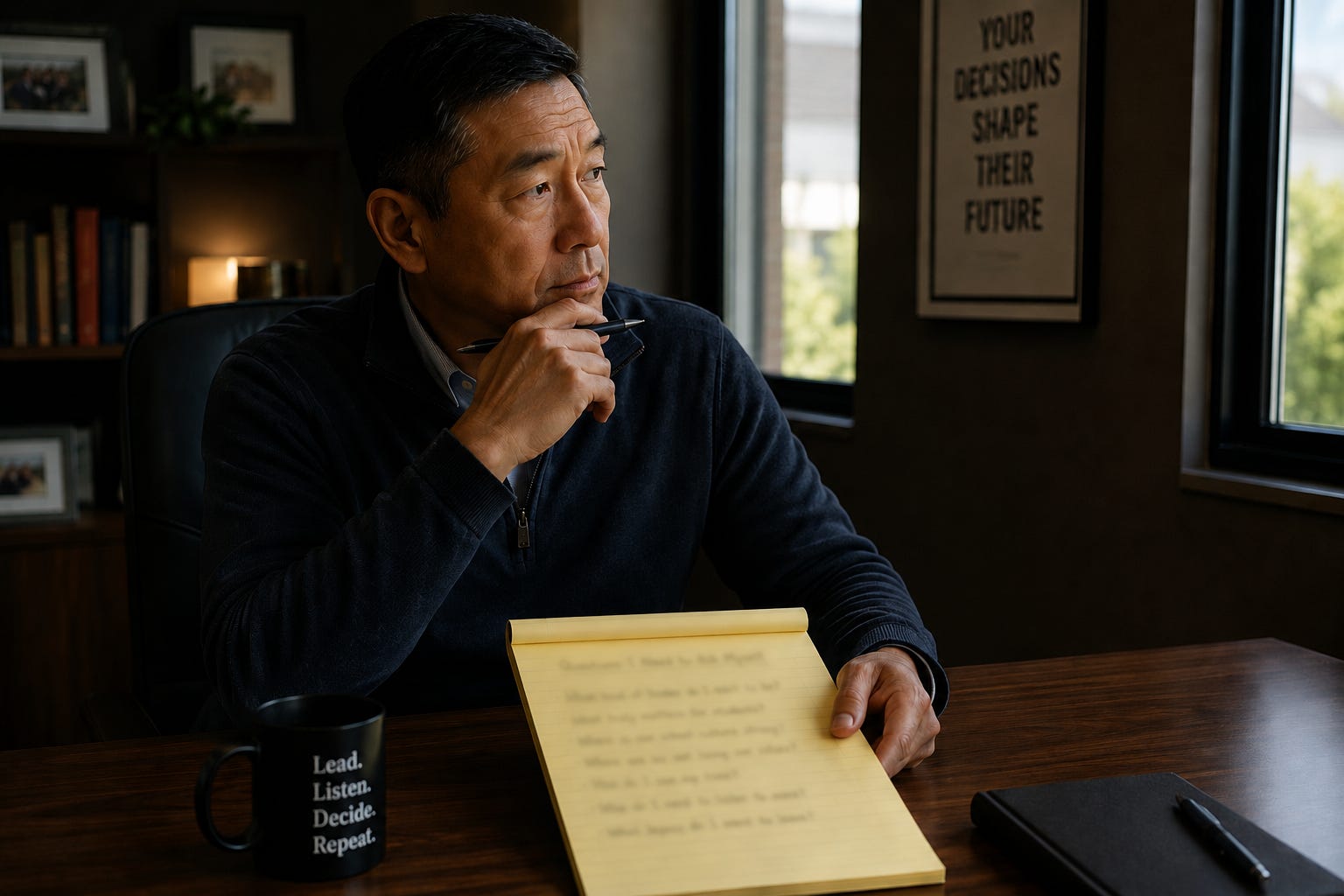
These are not comfortable questions. That’s the point. Comfortable reflection produces comfortable improvement, which is no improvement at all.
Then share what you found. Tell your AP. Tell a trusted colleague. Say out loud the thing you’re least proud of from the year. Naming it publicly, even to one person, creates accountability for changing it.
The leaders who improve most consistently are not the ones who had the best years. They’re the ones who examined every year, good and bad, with the same disciplined honesty.
TRANSFERABLE PRINCIPLE
The year you don’t examine is the year you repeat.
School leaders who skip honest year-end reflection carry the same unresolved problems into the next school year and wonder why the patterns repeat. Schedule structured self-examination in the first week of summer. Use specific questions. Write your answers. Share at least one of them with someone who will hold you to it. Reflection without accountability is just journaling. Accountability without reflection is just busywork. You need both.
Until next time — the chair is yours.
Next issue: A teacher tells you in confidence she’s been struggling with her mental health.
Those are really great questions.
great questions that I think every leader should be asking.
Unfortunately, I think this is skipped all the time. Slow down, evaluate; this is much more valuable.
I am looking forward to your next article.